Goa in January: New Year, Festivals and Perfect Weather
January in Goa is a tale of two halves. The first week rides the dying wave of New Year's Eve energy — inflated prices, packed beaches, and traffic that turns a 15-minute drive into an hour-long ordeal. Then, around January 7 to 10, the holiday crowds begin to thin, prices drop noticeably, and Goa settles into what many seasoned travelers consider its best month. The weather is flawless. The sea is calm. The restaurants have tables available. And the cultural calendar delivers some of the most authentic Goan festivals of the year.
If you are planning a Goa trip and have flexibility on timing, mid to late January hits the sweet spot of peak-season weather without peak-season chaos. This guide covers everything — weather conditions, festivals, what beaches feel like, where to eat, pricing realities, and how to plan a January visit that gives you the best of Goa without the worst of peak season.
January Weather in Goa: As Good As It Gets
January weather in Goa is as close to perfect as any tropical destination offers. Daytime temperatures range between 29 and 32 degrees Celsius, with nighttime lows of 20 to 23 degrees — warm enough for beach days, cool enough for comfortable sleep. Humidity is at its annual low, hovering around 50 to 60 percent, which feels genuinely pleasant compared to the 80-plus percent humidity of monsoon and pre-monsoon months.
Rainfall in January is essentially zero. You can plan outdoor activities — beach days, boat trips, scooter rides, outdoor dining — with near-total confidence that rain will not interfere. The sea temperature sits around 27 degrees, perfect for swimming, and the Arabian Sea is calm with gentle swells ideal for both swimmers and paddleboard enthusiasts.
The light quality in January is exceptional. Late afternoon and sunset hours produce warm golden tones that photographers prize, and the low angle of the winter sun creates long, dramatic shadows across Goa's Portuguese-era architecture. If you care about photography — whether professional or Instagram — January is your month.
What to Pack for Goa in January
Light cotton clothing, swimwear, sunscreen (SPF 50+), sunglasses, and a wide-brimmed hat for beach days. A light jacket or shawl for evenings — January nights can feel surprisingly cool, especially near the coast or in inland areas like Assagao. Comfortable walking shoes for market visits and heritage exploration. Insect repellent for dusk hours, though mosquito activity is minimal in January's dry conditions.
The First Week: Post-New Year's Energy
The first five to seven days of January are effectively an extension of the holiday season. The New Year's Eve crowds linger, hotels remain at peak capacity, and prices stay at their December highs. Beaches like Baga, Calangute, and Palolem are packed from mid-morning onward, and getting a table at popular restaurants requires either early arrival or a reservation.
The upside of early January is the residual festive energy. Beach parties, club events, and live music continue through the first week. The Sunburn afterparties and satellite electronic music events often spill into early January. If you enjoy the buzzy, social atmosphere of peak Goa, the first week delivers it with slightly less intensity than the actual holiday period.
The downside is cost. Hotel rates in the first week of January are typically 40 to 60 percent higher than mid-January rates. Villa rentals follow a similar pattern — booking a property like Casa Amore Aquasol or Casa Amore Baia for the first week of January will cost more than booking for the third or fourth week. If budget is a consideration, shifting your dates by even one week makes a meaningful difference.
Mid to Late January: The Sweet Spot
From around January 10 onward, Goa enters what many repeat visitors consider its optimal period. The holiday tourists have departed, but the weather remains perfect. Beach space opens up — you can actually find sunbeds at popular beaches without arriving at dawn. Restaurant reservations become easier, and the general pace of life downshifts from frenetic to pleasantly relaxed.
The European charter tourist season is in full swing during mid-January, which means you will encounter a significant contingent of British, German, Russian, and Scandinavian visitors, particularly in North Goa. This adds a cosmopolitan character to the beach and restaurant scene without the overwhelming density of the holiday period.
Accommodation prices drop to standard peak-season rates — still higher than off-season, but 20 to 40 percent less than the first week of January. Flight prices from major Indian cities also normalize, making mid to late January significantly more affordable overall.
January Festivals and Events
Feast of the Three Kings (January 6)
The Feast of the Three Kings (Festa dos Reis Magos) is one of Goa's most distinctive religious celebrations, held annually on January 6 at three churches: Reis Magos Church near Panjim, Cansaulim Church in South Goa, and Chandor Church. The celebration reenacts the story of the Three Wise Men visiting the infant Jesus, with young boys from the parish dressing as kings and bearing gifts to the altar.
The most visually dramatic celebration happens at Reis Magos, where the three boys descend from the hilltop fort to the church below, accompanied by a procession of parishioners. The church, perched on a promontory overlooking the Mandovi River, provides a stunning backdrop. After the religious ceremony, a village fair with food stalls, games, and music takes over the surrounding area.
For visitors, this festival offers a genuine glimpse into Goa's Catholic cultural traditions — community-centered, unpretentious, and rooted in centuries of continuous practice. Arrive early (by 9 AM) for the procession, and stay for the fair afterward.
Republic Day Celebrations (January 26)
Republic Day is a national holiday celebrated across India, but Goa's celebrations have a distinctly local character. The official parade and flag-hoisting ceremony at the Campal parade ground in Panjim includes performances by school children, cultural troupes, and military bands. The atmosphere is patriotic but relaxed — think small-town parade rather than Delhi's massive military display.
For tourists, Republic Day is mainly relevant because it is a public holiday — banks, government offices, and some businesses close, but tourist-facing establishments (restaurants, beach shacks, attractions) operate normally. It is a good day for cultural exploration — many heritage sites and museums offer free or discounted entry.
Goa Food and Cultural Festival
Late January typically sees the annual Goa Food and Cultural Festival, a multi-day event featuring Goan cuisine, live music, traditional dance performances, and artisan crafts. The festival location varies by year — recent editions have been held in Panjim and Margao. It is an excellent opportunity to sample a wide range of traditional Goan dishes in one place, watch folk performances like the dekhni and mando dances, and browse handicrafts from local artisans.
Cherry Blossom Season
Yes, Goa has cherry blossoms — or more accurately, the Tabebuia rosea trees (also known as Pink Trumpet trees) that line many Goan roads burst into bloom during January and February. The trees drop their leaves and produce clusters of pink flowers that create a canopy effect along avenues in Panjim, Margao, and various towns. While not comparable to Japanese cherry blossoms in scale, they add a beautiful pink-hued dimension to Goa's already colorful landscape.
Beach Life in January
North Goa Beaches
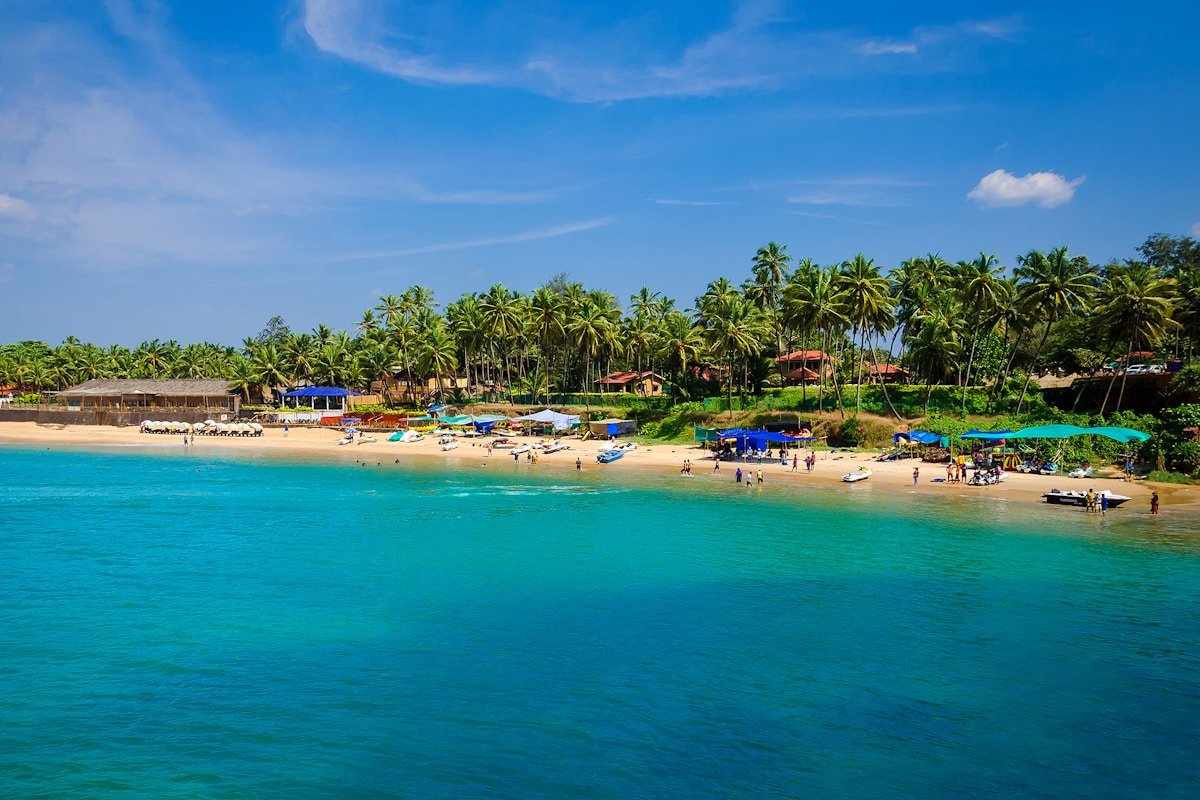
Calangute and Baga remain busy throughout January but are genuinely enjoyable once the first-week crush subsides. The water sports scene is at its peak — parasailing, jet skiing, banana boats, and bumper rides are all available. Sunbed-and-umbrella setups cost 300 to 500 rupees per pair for the day, with free usage if you order food and drinks from the shack.
Anjuna has a laid-back vibe with a mix of long-stay foreigners and Indian weekenders. The famous Anjuna Flea Market operates every Wednesday, and the Saturday Night Market at Arpora runs through January. Vagator and Ozran (Little Vagator) offer dramatic cliff-backed beaches with a more alternative atmosphere — these are the beaches for those who find Calangute too commercial.
Morjim, Ashwem, and Mandrem are the quieter North Goa beaches, and in January they hit their stride — warm sand, calm waters, fewer crowds, and excellent beach shacks serving everything from grilled fish to wood-fired pizza. If you are staying at Casa Amore Baia in Mandrem, you are a short walk from one of Goa's most serene stretches of coastline. January is when Mandrem Beach feels most perfectly itself — uncrowded, unhurried, and impossibly beautiful at sunset.
South Goa Beaches
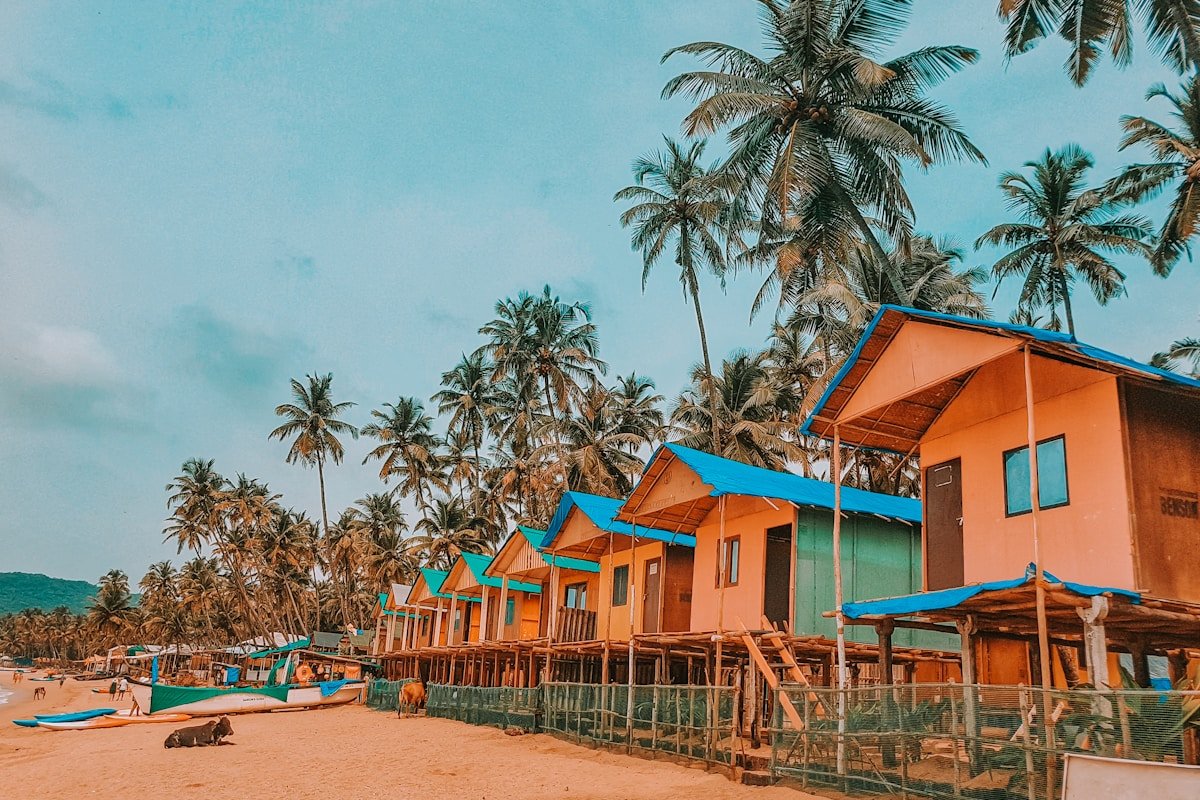
Palolem, Goa's most popular backpacker beach, is busy but manageable in January. The crescent-shaped bay with calm, shallow water makes it ideal for swimming, and the beach hut accommodations along the shore create a distinctive village-on-the-beach atmosphere. Agonda, the next beach south, is quieter and better suited to those seeking solitude.
Benaulim, Varca, and Cavelossim — the South Goa resort belt — offer long, wide, mostly empty beaches backed by luxury hotels. These beaches feel like a different world from North Goa's busier stretches. January is an excellent time to visit if you want genuine peace, long beach walks, and minimal commercial activity.
What to Do in January Beyond the Beach
Old Goa Heritage Walk
January's comfortable temperatures make it the ideal month for exploring Old Goa — the former capital of Portuguese India and a UNESCO World Heritage Site. The Basilica of Bom Jesus (housing the remains of St. Francis Xavier), Se Cathedral (the largest church in Asia), and the Church of St. Cajetan (modeled on St. Peter's Basilica in Rome) are all within walking distance of each other. The archaeological museum on the same stretch adds historical context. Budget 3 to 4 hours for a thorough visit.
Spice Plantation Tours
The spice plantations of central Goa — Sahakari, Tropical Spice Plantation, and Savoi Plantation near Ponda — offer guided tours through working farms where cinnamon, cardamom, pepper, nutmeg, vanilla, and dozens of other spices grow. Tours typically include a traditional Goan lunch, and some plantations offer elephant bathing or butterfly garden experiences. January is perfect for these tours — the dry conditions make walking the plantation trails comfortable, and many spice plants are in their fruiting season.
Kayaking and Dolphin Watching
January's calm seas make it excellent for kayaking along Goa's rivers and coastline. Kayak trips on the Zuari and Mandovi rivers offer sightings of mangroves, kingfishers, and crocodiles. Dolphin-watching boat trips from Sinquerim, Coco Beach, and Palolem have high success rates in January — pods of Indo-Pacific humpback dolphins are regular visitors to Goa's coastal waters during the dry season.
Cycling Through the Villages
The cool January mornings are ideal for cycling through Goa's interior villages. Routes through Divar Island (ferry from Old Goa), the Aldona-Corjuem loop, and the Assagao-Saligao-Sangolda circuit pass through rice paddies, old Portuguese houses, village churches, and local bakeries where you can stop for freshly baked poi (Goan bread). Several operators in North Goa offer guided cycling tours with bikes and route support.
Dining in January
January is an excellent month for dining out in Goa. The seasonal restaurants and beach shacks are fully operational, menus are at their most extensive, and the slight reduction in crowds after the first week means better service and easier reservations.
In the Assagao-Siolim corridor near Casa Amore Aquasol, restaurants like Cavatina, Jamun, Villa Blanche, and Gunpowder are at peak form. Reservations for dinner at Cavatina should be made 2 to 3 days in advance. For a more casual experience, the beach shacks along Ashwem and Mandrem serve outstanding grilled seafood with sunset views.
The markets are at their best in January too. The Mapusa Friday Market offers fresh produce, spices, Goan sausages, and street food. The Anjuna Wednesday Flea Market mixes crafts, clothing, and food stalls in a vibrant bazaar atmosphere. The Saturday Night Market at Arpora runs from 6 PM to midnight with live music, international food, and a carnival-like energy.
Accommodation Pricing in January
January accommodation pricing in Goa follows a clear curve. The first week (January 1-7) is the most expensive period of the entire year, with rates 50 to 100 percent above standard peak-season levels. From January 8-15, prices drop to standard peak-season rates. From January 16-31, prices are at comfortable peak-season levels — still higher than off-season but reasonable for the quality of experience.
For villa rentals, a luxury property like Casa Amore Aquasol in Assagao or Casa Amore Baia in Mandrem offers exceptional value in mid to late January. You get perfect weather, full access to all seasonal attractions and restaurants, and pricing that reflects the post-holiday normalization. Book at least 4 to 6 weeks in advance for January dates — while not as competitive as December, popular properties do fill up.
Getting Around Goa in January
The first week of January presents the same traffic challenges as December — congestion in North Goa's tourist belt, slow-moving traffic on the Calangute-Baga stretch, and limited parking at popular beaches. After the first week, traffic normalizes significantly.
Scooter rental remains the most flexible transport option — rates run 300 to 500 rupees per day for an automatic scooter (Honda Activa is the standard). Always wear a helmet, carry your international driving permit alongside your rental agreement, and avoid riding after dark. For those who prefer four wheels, self-drive car rentals are available from 1,500 to 3,000 rupees per day depending on vehicle type.
Pre-paid taxis from the airport avoid negotiation stress — counters at both Dabolim and Mopa airports offer fixed rates. Within Goa, the Goa Miles app provides standardized pricing and is more reliable than negotiating with individual taxi drivers.
Frequently Asked Questions
Is January a good time to visit Goa?
January is one of the best months to visit Goa. The weather is near-perfect (29-32 degrees, no rain, low humidity), the sea is calm for swimming, and all seasonal attractions and restaurants are fully operational. Mid to late January is particularly recommended — you get peak-season weather with lower prices and thinner crowds than the December-early January holiday rush.
How hot is Goa in January?
Daytime temperatures in January range from 29 to 32 degrees Celsius, with nighttime lows of 20 to 23 degrees. The heat is comfortable rather than oppressive, with low humidity (50-60%) making it feel pleasant even at midday. Compared to April and May (when temperatures exceed 35 degrees), January is significantly more comfortable for outdoor activities.
Is January peak season in Goa?
Yes, January falls within Goa's peak tourist season (November to February). However, January is less intense than December — particularly after the first week, when holiday crowds depart and pricing drops 20 to 40 percent from the December-New Year peak. Late January offers a sweet spot of peak-season weather with shoulder-season crowds.
Can you swim in the sea in Goa in January?
Yes, January is one of the best months for swimming in Goa. The Arabian Sea is calm with gentle swells, water temperature is around 27 degrees, and lifeguards are on duty at all major beaches. The sea conditions are ideal for swimming, snorkeling, and water sports. Always swim at lifeguarded beaches and observe the flag warning system.
What festivals happen in Goa in January?
Key January festivals include the Feast of the Three Kings (January 6) at Reis Magos, Cansaulim, and Chandor churches; Republic Day celebrations (January 26); and the annual Goa Food and Cultural Festival (dates vary). These events offer authentic cultural experiences beyond the typical beach holiday.
How much does a January trip to Goa cost?
A mid-range January trip costs roughly 4,000 to 8,000 rupees per person per day including accommodation, food, transport, and activities. Budget travelers can manage on 2,000 to 3,000 rupees per day with hostels and beach shacks. Luxury travelers staying at private villas with fine dining and premium experiences should budget 15,000 to 30,000 rupees per person per day. Prices are highest in the first week and normalize from mid-January onward.
What should I wear in Goa in January?
Light cotton clothing, swimwear, and comfortable sandals during the day. Sunscreen (SPF 50+), sunglasses, and a hat are essential. Pack a light jacket or shawl for evenings — January nights can feel cool, especially near the coast. For restaurant dining, smart-casual attire is sufficient at even the more upscale venues. Modest clothing (covered shoulders and knees) is appropriate for church and temple visits.
Is there good nightlife in Goa in January?
Excellent. January is peak season for Goa's nightlife scene. Major clubs like Tito's (Baga), Club Cubana (Arpora), and Chronicle (Vagator) operate at full capacity. Beach parties at Curlies and Hilltop in Anjuna/Vagator continue through January. The electronic music scene is active with both established venues and pop-up events. Late-night beach shack sessions with live music are common throughout North Goa.
How far in advance should I book accommodation for January in Goa?
Book at least 6 to 8 weeks in advance for the first week of January (New Year period). For mid to late January, 4 to 6 weeks ahead is usually sufficient, though premium properties and popular hotels fill earlier. Villa rentals at properties like Casa Amore Baia and Casa Amore Aquasol should be booked as early as possible, as inventory is limited.
Is January good for a honeymoon in Goa?
January is excellent for a Goa honeymoon. The romantic setting — sunset beach walks, candlelit dinners, luxury villa stays — is enhanced by January's perfect weather and the post-holiday calm that settles over the state from mid-month onward. The quieter beaches of Mandrem, Ashwem, and Agonda are particularly honeymoon-suited. Private villa accommodation offers the intimacy that hotel stays cannot match.